
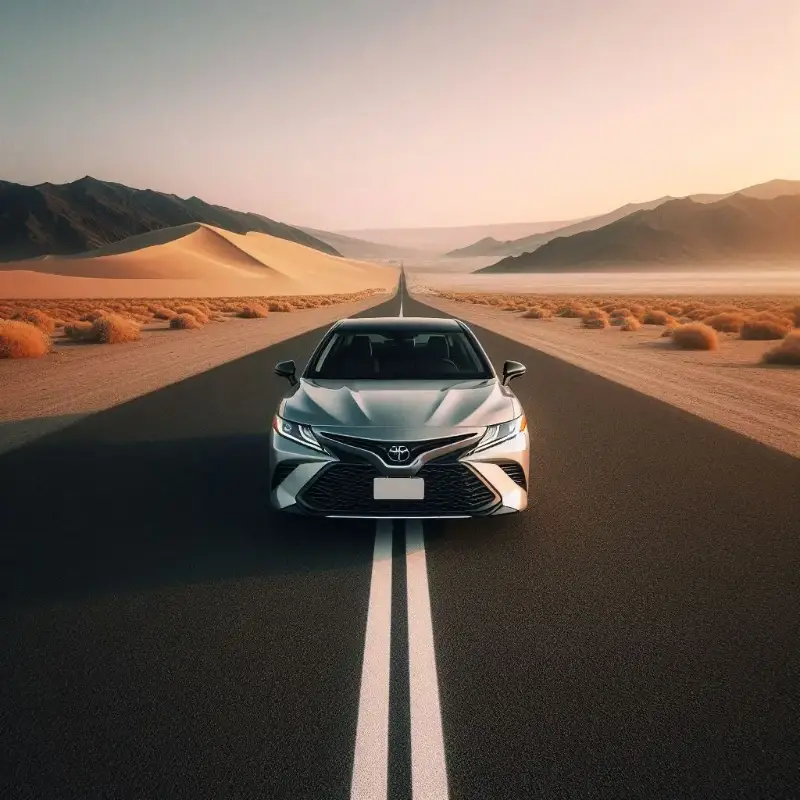
Wadi e Jinn is a valley about 35 km northwest of Masjid an Nabawi where cars seem to roll uphill with the engine switched off. It takes around 40 minutes to reach by road, there is no entry fee, and the best time to go is early morning or late afternoon in the cooler months. Many pilgrims add it to their Madinah ziyarat as a short, light-hearted stop after the holy sites.
This guide covers the exact location, the Madinah to Wadi e Jinn distance, how to get there, what actually happens on the road, the science behind it, and the safety points families should know before they go.
Wadi e Jinn Quick Facts
| Detail | What to Know |
|---|---|
| Distance from Masjid an Nabawi | About 35 km |
| Driving time | 35 to 45 minutes |
| Name on Google Maps | Wadi Al Baida (also shown as Wadi e Jinn) |
| Entry fee | None, it is a public road |
| Best time | October to March, morning or late afternoon |
| Time needed on site | 30 to 60 minutes |
Where Is Wadi e Jinn?
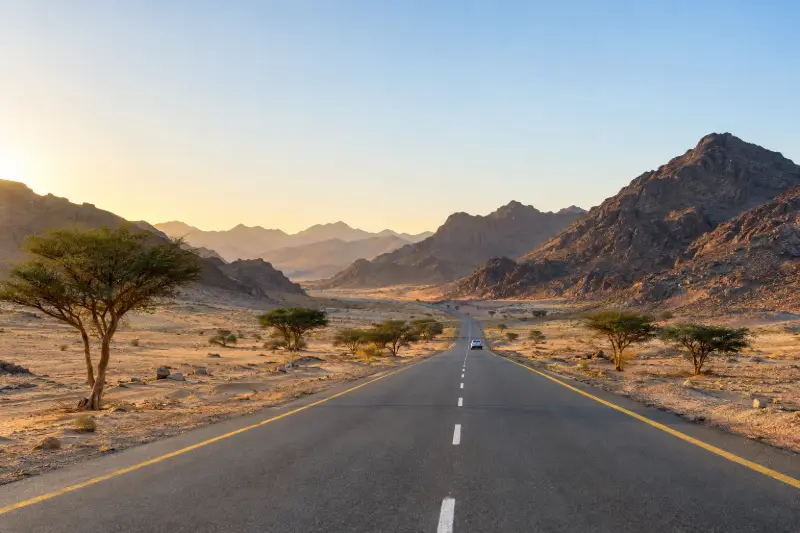
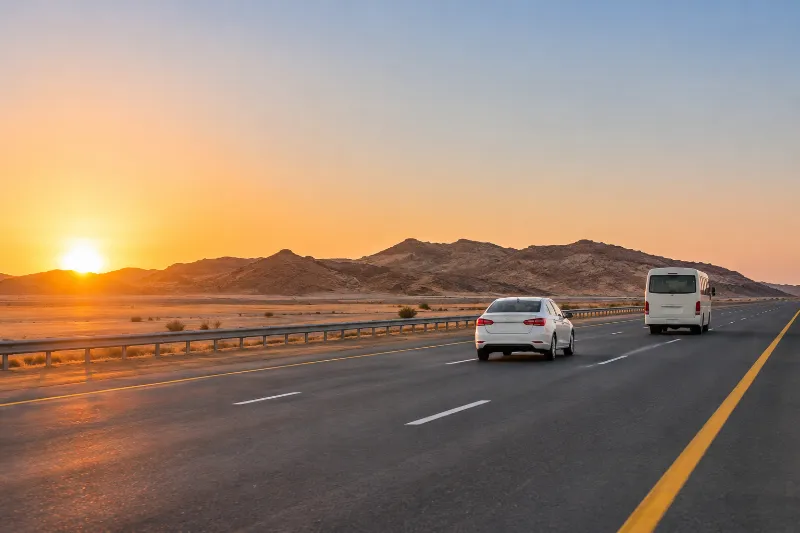
The Wadi Jinn location is on the northwest edge of Madinah, beyond the last neighbourhoods of the city, in an open valley ringed by dark volcanic hills. Its official name is Wadi Al Baida, which means the White Valley. Most visitors, and most drivers in Madinah, still call it Wadi e Jinn or Jinn Valley.
If you search on your phone, type Wadi Al Baida or Wadi e Jinn and both will take you to the same stretch of road. The area has no gate, buildings or signboards at the famous spot, so it helps to go with a driver who has been there before.
Madinah to Wadi e Jinn Distance and Travel Time
The Wadi e Jinn distance from Masjid Nabawi is about 35 km by road. In normal traffic the drive takes 35 to 45 minutes, a little longer at prayer times when the roads around the Haram are busy. The return trip takes the same time, so a visit with photos usually needs about 2 hours from leaving your hotel to getting back.
If you are already visiting Mount Uhud or Masjid al Qiblatain on the north and west sides of the city, the drive to the valley is shorter. That is why most ziyarat tours add Wadi e Jinn at the end of the day, after the main holy sites.
How to Get to Wadi e Jinn
There is no bus or train to the valley, so you need a car. You have three practical options.
Private Taxi or Ziyarat Tour
The easiest way is a private car that collects you from your hotel, waits at the valley and brings you back. With our Madinah ziyarat taxi, adding Wadi e Jinn to the city ziyarat costs SAR 250 in a sedan, SAR 300 in a Staria H1 and SAR 400 in a Hiace for groups. The driver knows the exact spot and how to do the roll safely, so you only have to enjoy it.
Ride-Hailing Apps
Apps like Uber and Careem will take you there, but the valley is outside the city and finding a car for the way back can take a long time. If you use an app, agree with the driver to wait for you and take you back to Madinah before you start the trip.
Driving Yourself
If you have a rental car, set your map to Wadi Al Baida and fill up in Madinah before you leave. The road is paved and easy to drive. There is no need for a 4×4.
What Happens at Wadi e Jinn?
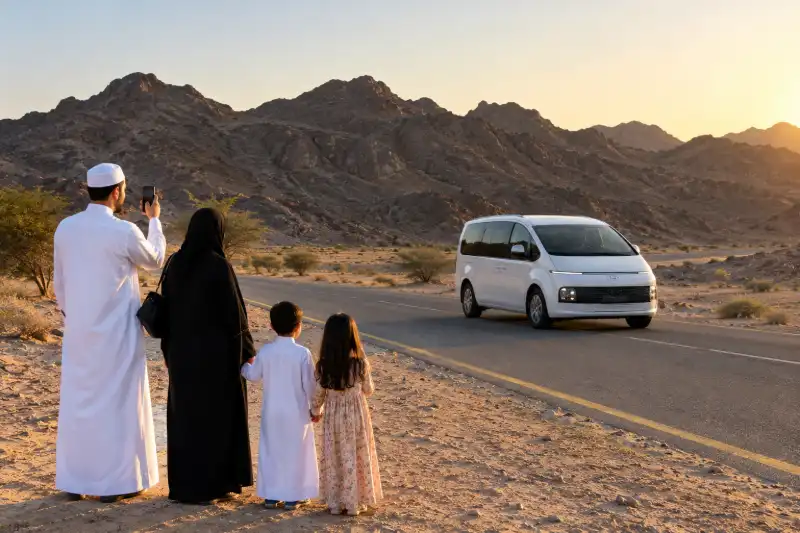
When you reach the right stretch of road, the driver slows down, stops, shifts into neutral and takes his foot off the brake. After a moment the car starts to move by itself, and it looks as if it is rolling uphill. Then it picks up speed. Children love it, adults laugh, and almost everyone films it.
Some people also pour water on the road or place a bottle on the asphalt to watch it move the same way. The effect lasts over a long stretch, so this is the reason many visitors say Wadi al Jinn cars move uphill on their own.
Remember that this is a public road. Other cars use it, and some drivers try the roll at the same time. Keep the hazard lights on, stay alert and never let children stand on the road while cars are moving.
Why Do Cars Roll Uphill? The Simple Science
Wadi e Jinn is what scientists call a gravity hill. The road actually slopes gently downhill, but the shape of the surrounding hills hides the true horizon. Your eyes take the hills as the level line, so a slight downhill looks like an uphill climb. The car simply follows gravity.
Similar spots exist in many countries, from Scotland to South Korea, and they all work the same way. There is no magnetic force at work. A bottle, a ball or a big SUV all roll in the same direction, which is the easiest proof that it is gravity and not anything hidden.
Is Wadi e Jinn Linked to Real Jinn?
Jinn are real and mentioned in the Quran, including Surah Al Jinn. However, no verse or authentic hadith links this valley to jinn. The name comes from local stories told long before anyone understood the optical illusion.
So there is no religious reason to fear the place or to treat it as special. Visit it as a natural wonder, read your usual morning and evening adhkar as you would anywhere, and keep the focus of your trip on the masjids and the Sunnah ziyarat of Madinah.
Best Time to Visit Wadi e Jinn
From October to March the weather is mild and the valley is pleasant during the day. From May to September, midday temperatures in the open desert often pass 45°C, so only go very early in the morning or in the last two hours before sunset.
Early morning after Fajr gives soft light for photos and an almost empty road. Late afternoon is the busiest time with local families, and the sunset over the hills is beautiful. Fridays and public holidays are the most crowded days.
Visiting Wadi e Jinn at Night
Many people search for Wadi e Jinn at night because the stories make it sound exciting. In reality the road has no street lights, the hills block most light from the city and the roll is hard to see in the dark. Visiting after Maghrib is possible, but daylight is safer and you will get much better videos.
Is Wadi e Jinn Safe for Families?
Yes, it is a normal public road and families visit every day. These simple points keep the trip relaxed:
- Watch for other cars, especially when everyone stops to try the roll at the same spot.
- Keep children off the road and away from moving cars.
- Carry water and avoid midday in summer, as the heat in open desert is intense.
- Wear closed shoes, as the ground beside the road has stones and thorny plants.
- Keep your phone charged. In an emergency, call 999 for police or 997 for an ambulance.
What to Bring
Facilities near the valley are very basic, so plan to bring what you need:
- Water, at least one large bottle per person
- Sun protection such as a cap, sunglasses and sunscreen
- A charged phone or power bank for videos
- A small prayer mat if you will pray Asr or Maghrib there
- Dates or snacks for children
- A bag to take your rubbish back with you
Combine Wadi e Jinn With Your Madinah Ziyarat
The best plan for most pilgrims is one half-day trip. Start after Fajr with Masjid Quba, Masjid al Qiblatain, Mount Uhud and the Seven Mosques, then finish at Wadi e Jinn before driving back to your hotel. Our Madina ziyarat places list covers every stop on the route. You see the holy sites while it is cool, and the valley becomes a fun end to the morning for children and parents alike.
You can book the full route with our Madinah ziyarat taxi. The price is fixed in advance, the driver waits at every stop and your hotel pickup and drop are included. Message us on WhatsApp with your hotel name and date to book.
Wadi e Jinn FAQs
How far is Wadi e Jinn from Madinah?
Wadi e Jinn is about 35 km northwest of Masjid an Nabawi. The drive takes 35 to 45 minutes each way in normal traffic, so plan around 2 hours for the full trip including time to try the roll and take photos.
Is there an entry fee for Wadi e Jinn?
No. Wadi e Jinn is an open public road with no gate, ticket or permit. You only pay for your transport, such as a taxi, a ride-hailing app or fuel if you are driving a rental car yourself.
Why do cars move uphill at Wadi e Jinn?
It is an optical illusion called a gravity hill. The road slopes gently downhill, but the surrounding hills hide the true horizon, so it looks uphill. The car is simply rolling with gravity, and there is no magnetic force involved.
What is the best time to visit Wadi e Jinn?
October to March is the most comfortable season. Go early in the morning after Fajr for an empty road and soft light, or in the late afternoon before sunset. Avoid the middle of the day in summer because of the heat.
Can I visit Wadi e Jinn at night?
You can, but it is not ideal. The road has no street lights and the roll is hard to see or film in the dark. Daylight visits are safer for families, and the valley and hills look far better in photos.
How much is a taxi from Madinah to Wadi e Jinn?
With our Madinah ziyarat taxi, the city ziyarat plus Wadi e Jinn costs SAR 250 in a sedan, SAR 300 in a Staria H1 and SAR 400 in a Hiace. The fare covers hotel pickup, waiting time and the drive back.
Is Wadi e Jinn really connected to jinn?
No authentic Islamic text connects this valley to jinn. The name comes from old local stories. The moving cars are explained by a well-known optical illusion, so you can visit it as a natural wonder without any worry.
Is Wadi e Jinn safe for children and elderly visitors?
Yes. It is a paved public road that families visit every day. Keep children off the road while cars are rolling, carry water, and avoid the summer midday heat. Elderly visitors can watch the effect from inside the car.



 All Rights Reserved.